


The OECD 2026 Skills Summit continues with the sessions of the second day
28 April 2026, Tuesday


The OECD 2026 Skills Summit continues with the sessions of the second day
The OECD 2026 Skills Summit continues with the sessions of the second day
The OECD 2026 Skills Summit, held at the Haliç Congress Center in Istanbul with the attendance of His Excellency President Recep Tayyip Erdoğan and participation of Minister of Labour and Social Security Prof. Dr. Vedat Işıkhan, is on its second day.
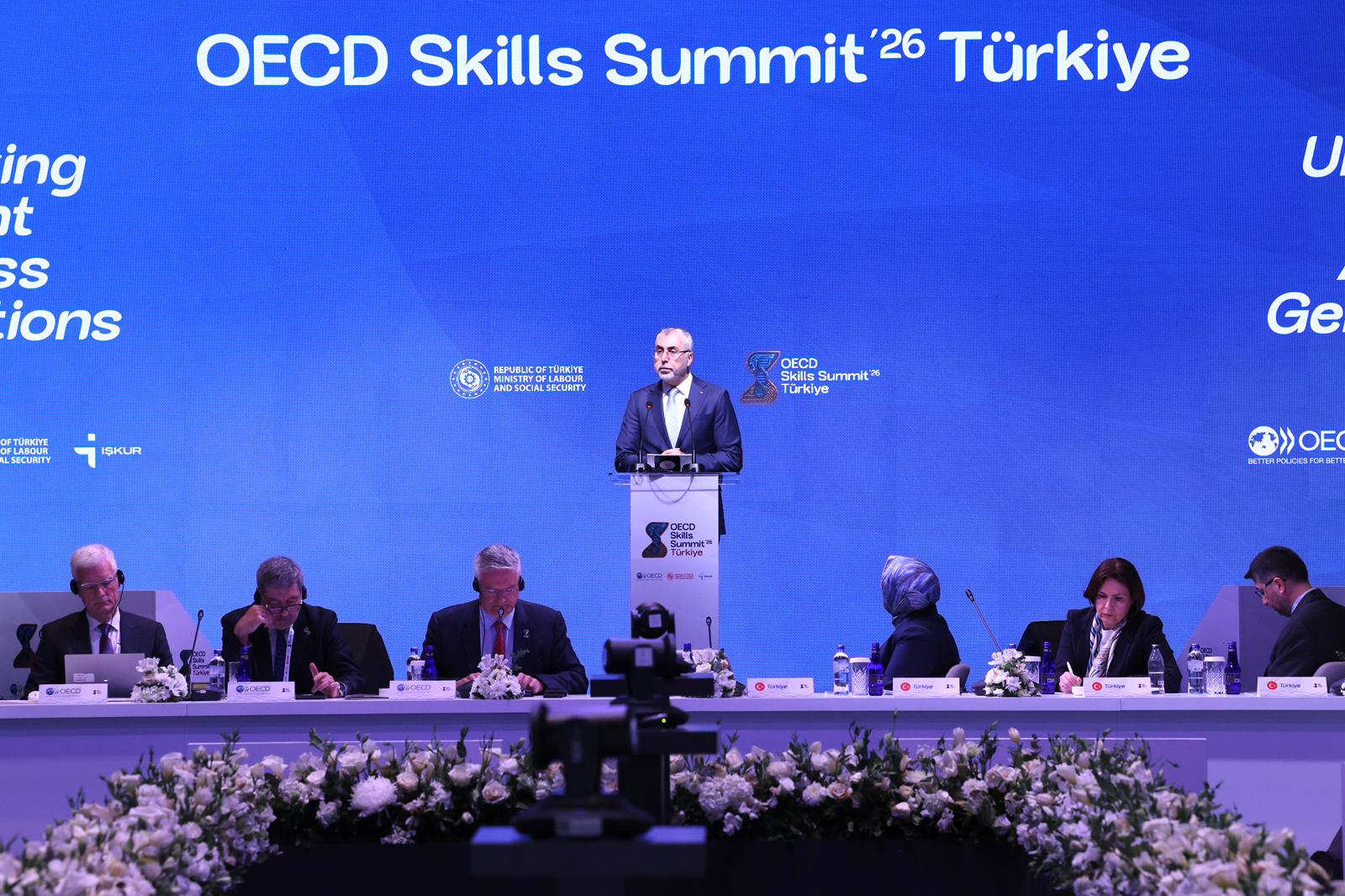
In his opening remarks on the second day of the summit, Minister Işıkhan said, “The discussions we held yesterday made it clear that skills policies have become one of the key indicators of economic competitiveness, productivity, and social welfare as part of a dynamic process. Today's discussions, however, focus not so much on the necessity of transformation, but rather on the question of how this transformation will be implemented—through which tools, governance models, and policy priorities.”
Noting that the topics to be addressed reflect the complementary stages of an individual’s life cycle, Işıkhan went on to say, “Equipping individuals with strong skills at an early age, supporting continuous learning (lifelong learning) throughout their working lives, and integrating individuals whose potential has not been sufficiently harnessed into the system in a productive manner. In this regard, we can view all these topics as integral parts of a unified skills and employment ecosystem. The education systems we will address in the opening session are undergoing a profound transformation. Driven by demographic, digital, and green transformations, the value of skills is rapidly changing, and the nature of professions is constantly redefining itself. Within this context, the fundamental role of education systems should be to equip individuals with the capacity to learn how to learn, adapt, and manage transformation.”
“At the root of the skills gap lies, more than a lack of skills, the inability to effectively utilize existing skills”
Minister Işıkhan stated in the second session that the focus would be on adult skills, as they are at the heart of the labour market, and continued as follows:
“Today, achievement is measured not only by the skills taught to younger generations but also by adults’ ability to adapt to changing conditions. The lengthening work life and increasing career transitions make the continuous updating of skills a necessity. Therefore, as policymakers, our priority is to strengthen systems that enable individuals to develop their skills throughout their working lives and use them effectively. The final session of the day focuses on unlocking the unutilized potential in labour market. At the root of the skills gap discussed in many countries lies, often, the ineffective use of existing skills rather than a lack thereof. The failure to sufficiently integrate women, youth, and disadvantaged groups into the workforce is a significant loss in terms of growth and productivity. In particular NEET rates and women’s workforce participation rates are becoming increasingly critical. All these assessments clearly demonstrate that skills policies and labor market policies are inseparable. Accordingly, what is needed is the establishment of a stronger, more integrated, and results-oriented policy framework that bridges education, employment, and social policies.”
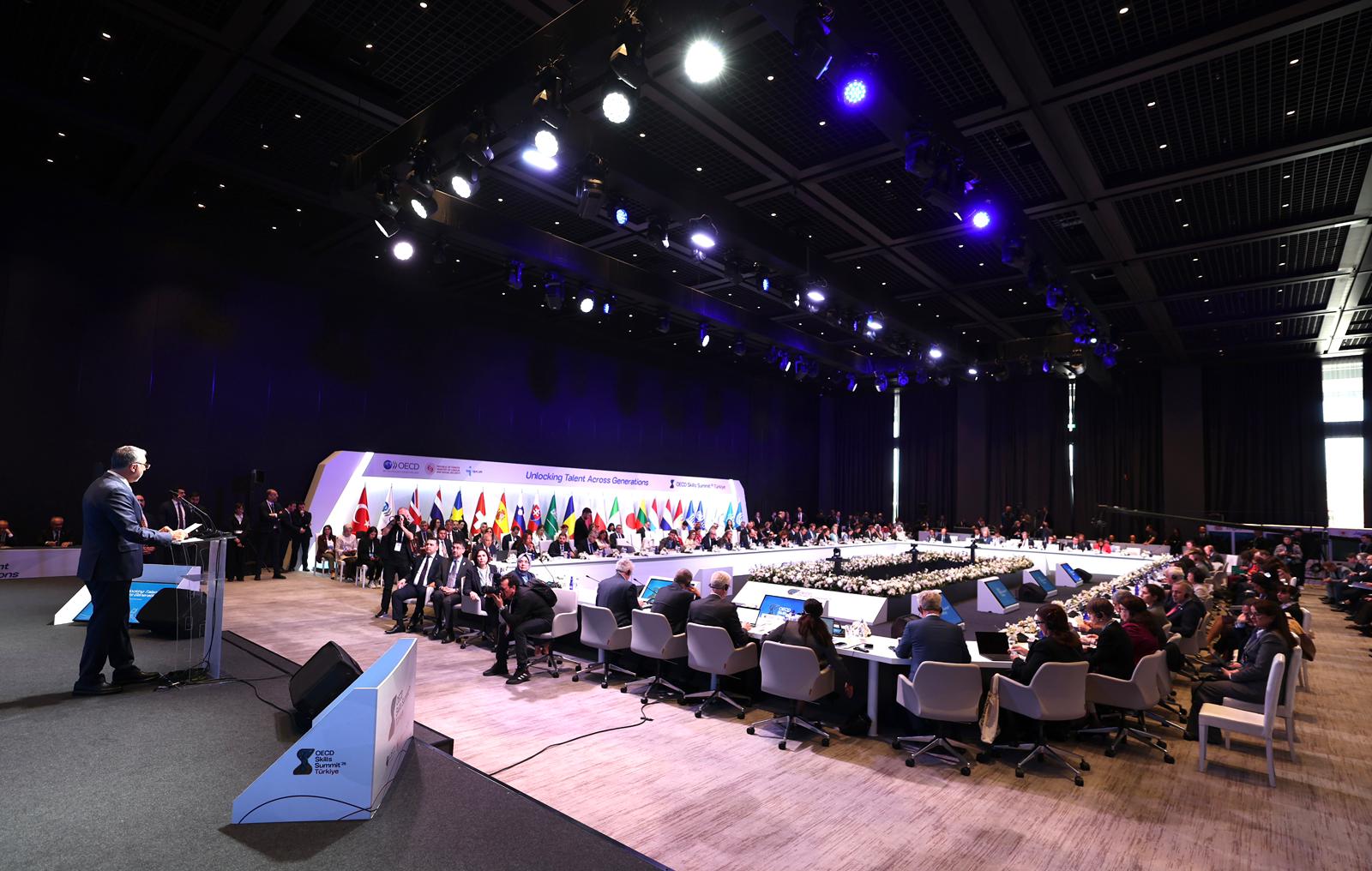
“We track demand in real time with the Open Job Map; thanks to the Candidate Pool System, we are able to direct individuals toward job opportunities in the most accurate and efficient manner."
Noting that Türkiye has adopted a guiding and shaping approach in this multidimensional transformation process, Işıkhan stated as follows, “In this regard, our top priority is to establish a comprehensive framework that aligns skills policies with the needs of the labour market and is supported by social protection mechanisms. The most significant feature of our National Employment Strategy, which we launched last year and covers the 2025–2028 period, is that the strategy places skills at the very center of employment policies. In this context, we have significantly strengthened the institutional capacity and digital infrastructure of our national employment agency, İŞKUR. Through the ‘Open Job Map,’ demand is monitored in real time and thanks to our matching tools, which are supported by artificial intelligence and based on the ‘Candidate Pool System’ and multidimensional analyses, we can guide individuals toward the most appropriate employment opportunities in the fastest and most accurate manner. This system analyzes the distance between individuals and their employment opportunities, thereby enabling personalized policy interventions.”
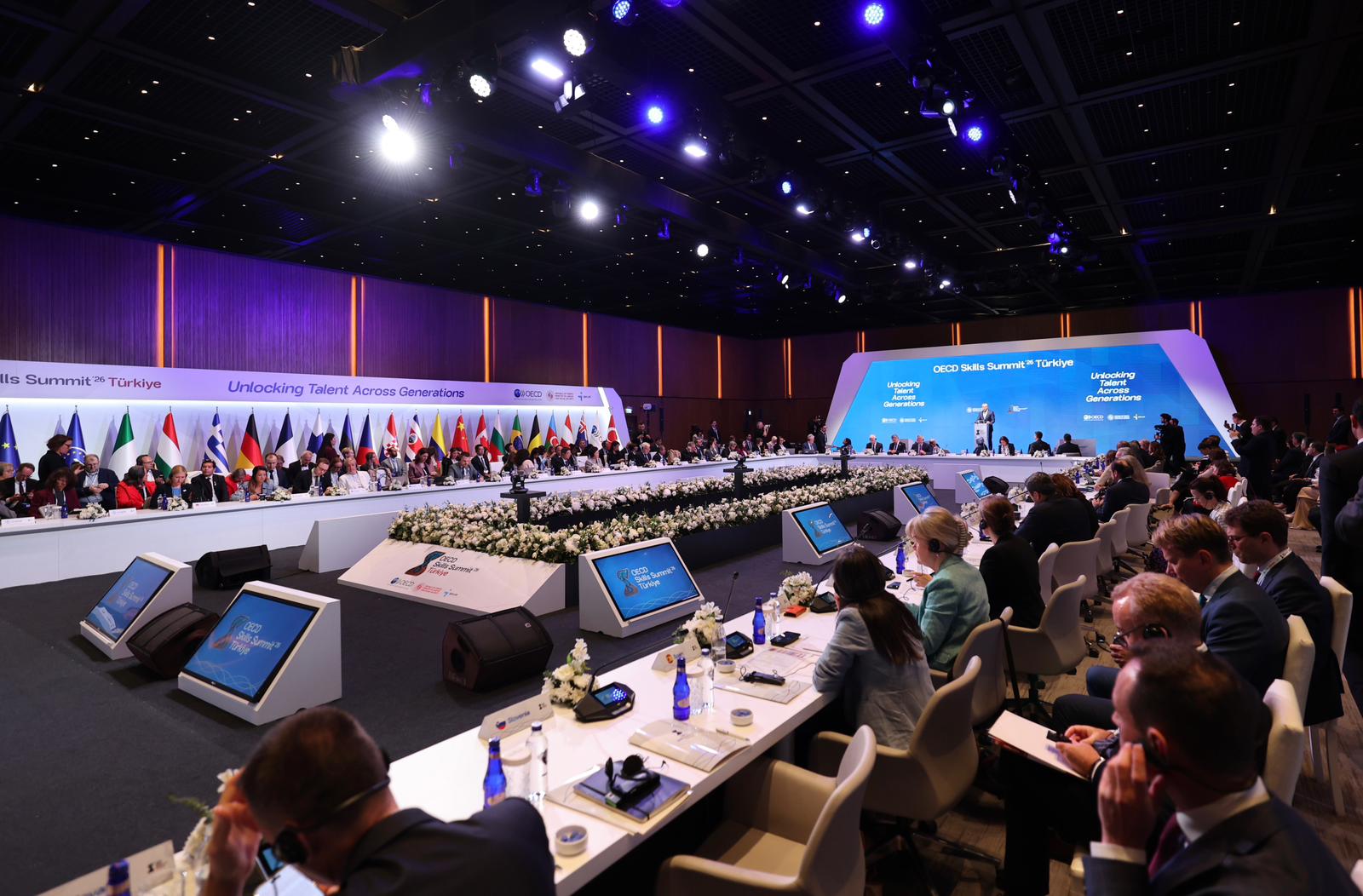
Skills Inventory Project
Minister Işıkhan also emphasized that the “Skills Inventory Project, which analyzes occupations through dynamic skill sets, aims to identify employers’ needs more accurately and assess individuals’ competencies more effectively.
Noting that the ministry is implementing targeted and comprehensive policies for groups in the workforce, particularly women and young people, Işıkhan continued his remarks as follows:
“Our efforts to boost women’s employment span a wide range of initiatives, from education and incentives to childcare support and entrepreneurship. Through the İş Pozitif Program, which is one of our most comprehensive initiatives in this field, we have supported the employment of nearly 2 million women since 2024. Our approach to young people, however, is not limited to merely increasing their participation in the workforce; the goal is to prepare them for the future as individuals with high-level skills who can lead the way in technology and production. Through the İŞKUR Youth Program, the Advisor Information System, and the KALFA Program, we support qualified employment participation by integrating vocational training, on-the-job learning, and career counseling. We have taken this approach a step further by significantly expanding our support for young people through the Youth Production Era (GÜÇ) Program, which we launched at the beginning of this year and which His Excellency the President also mentioned yesterday. Within the scope of this program, we offer a broad and innovative set of tools, ranging from internship and on-the-job training opportunities to skill development, career guidance, and wage subsidies.”
Minister Işıkhan stated that he prioritizes programs specifically designed for NEETs, and said, “In this way, we seek to strengthen not only vocational skills but also job-search skills and basic life competencies. With a budget of approximately 425 billion lira over the next three years, this program is expected to reach 3 million young people and offers multidimensional solutions to diverse needs.”
Işıkhan also made remarks regarding April 28, World Day for Safety and Health at Work. Minister Işıkhan highlighted the importance of skill development taking place in safe work and training environments, marking this meaningful day that has been commemorated since 2003.
Minister Işıkhan emphasized that the opinions and best practices to be presented during the summit’s thematic sessions will provide concrete contributions to both national policies and international cooperation, stressing that Türkiye is determined to advance this shared agenda in close collaboration with the OECD and translate it into tangible results.
At the conclusion of his remarks, Işıkhan extended his gratitude to OECD Secretary-General Mathias Cormann and his team.