


Minister Işıkhan Held Talks in Riyadh within the Scope of 3rd Global Labour Market Conference
26 January 2026, Monday


Minister Işıkhan Held Talks in Riyadh within the Scope of 3rd Global Labour Market Conference
Minister Işıkhan Held Talks in Riyadh within the Scope of 3rd Global Labour Market Conference
Minister of Labor and Social Security Prof. Dr. Vedat Işıkhan paid a visit to the capital of Saudi Arabia Riyadh in order to attend programs and hold talks within the scope of Global Labour Market Conference.
Ministerial Roundtable was hosted by Ahmad bin Sulaiman Al Rajhi, Minister of Human Resources and Social Development, in the first program of Global Labour Market Conference.
At the meeting themed “From Policy to Practice: Opening Immediate Pathways to Work amid Rapid Change”, Türkiye’s experiences and policies generated in this field were conveyed by Minister Işıkhan.
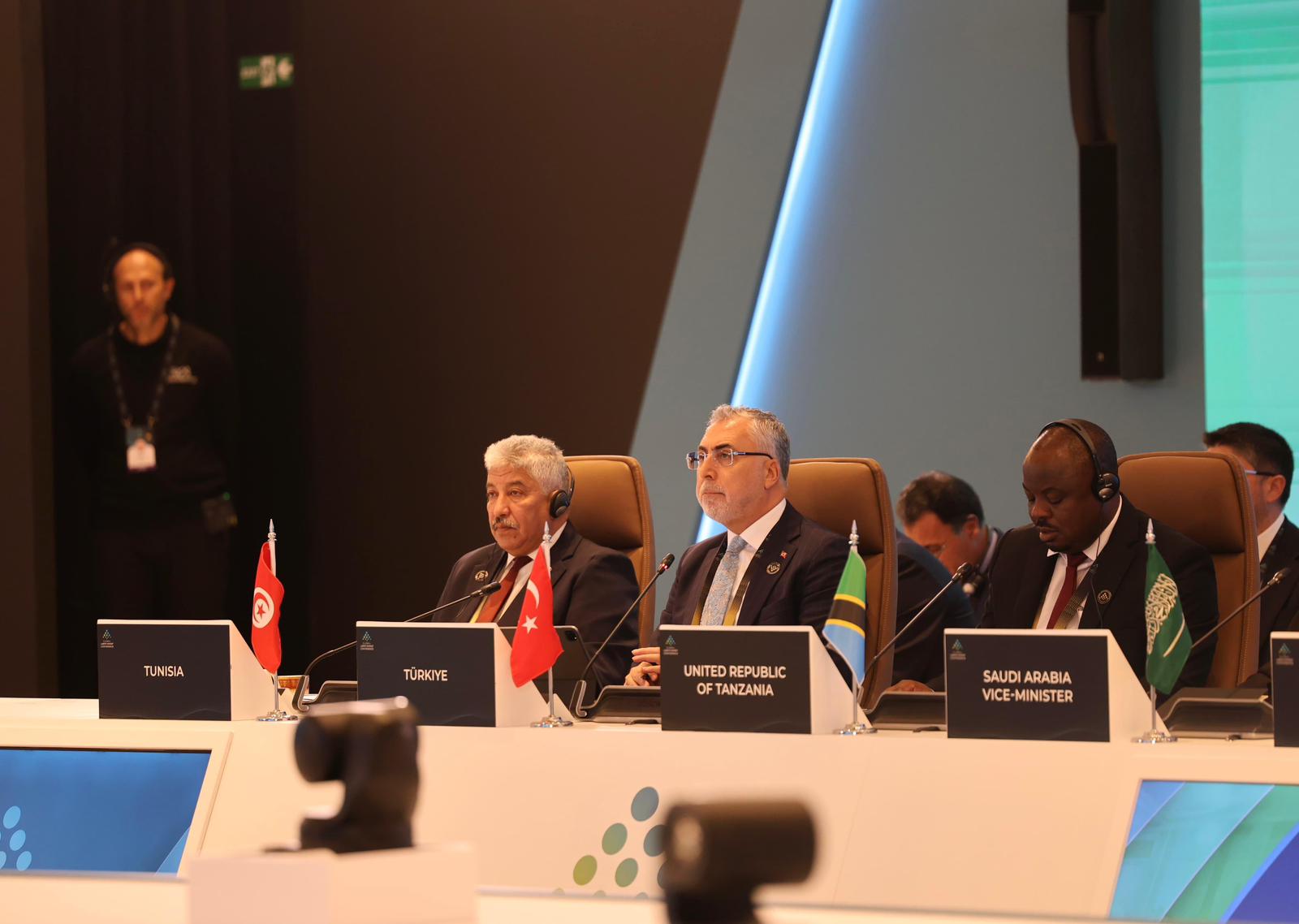
Recalling that the meeting was convened to address the prospects of transforming policy into practice and opening immediate pathways to work throughout this transition process in rapidly changing global labour markets, Minister Işıkhan stated, “As Türkiye, we are convinced that this process could end in success only with a holistic and outcome-oriented approach on the basis of data. In the light of this understanding, we introduced our National Employment Strategy, which we developed with our public institutions, social partners, academia and non-governmental organizations, under the leadership of our Distinguished President H.E. Recep Tayyip Erdoğan. Our Strategy is based on four pillars which are improving skills which comply with green and digital transition, empowering inclusive employment, consolidating the link between social protection and employment, sustainable employment in rural regions.”
Youth Employment Initiative-GÜÇ
Emphasizing that the main point is prompting concrete response to these policies in the field in a swift manner, Minister Işıkhan shared the following information:
“Therefore, we safeguard the transition from policy to implementation through our robust institutions. In this respect, our employment agency ISKUR assumes a key role. Under the umbrella of “Youth Employment Initiative-GÜÇ” recently declared to the public by our Distinguished President H.E. Recep Tayyip Erdoğan, we integrated our youth policies which we implement through ISKUR by adding new components. Youth Employment Initiative-GÜÇ is a comprehensive model of employment peculiar to Türkiye, lending multifaceted support to youth at every stage, thanks to its structure extending from apprenticeship to initial job placement; from vocational high school to university and from NEETs (young people who are not in education, employment or training) to private sector. Within this framework, our approach is based upon three fundamental principles: Access of youth to all services through a single digital gateway, early detection and swift guidance by means of data sharing, and providing a vigorous and safe shift between education and work environment. Within this scope, we are offering flexible and secure work experience for the benefit of undergraduates during their university education, counselling the youth at risk through one-to-one guidance. We thereby eliminate lack of experience as the major obstacle before youth unemployment. Furthermore, we envisage the occupations of today and those which will be demanded in the future, thanks to skill inventories and employer feedbacks, continuously updating our training and active labour market programs in this respect. At present, we have decreased the unemployment rate, which rose during the pandemic, to single digit levels, thanks to these policies we have firmly implemented. I would also like to state proudly that we have made lasting progress in women participation in labour and youth employment.
Drawing attention to the fact that no single country is able to generate solutions to the problems caused by skill deficits, demographic transition and migration flows at a global scale, considering the rapid changes and transformations in progress, Minister Işıkhan went on as follows: “Within the framework of its bilateral and multilateral collaborations, Türkiye is poised for sharing its experiences in the fields of data sharing, skills recognition and equitable mobility of labour force. Our transparent and digital system of work permits for foreigners, which we have developed in the light of bilateral labor agreements on the basis of rights-centred migration management approach, arises as an effective model matching labour supply and demand in a regular and equitable manner across borders as well, based on mutual benefit. All of these experiences we have put forth in the field indicate that “the transition from policy to practice” is possible and measurable.”
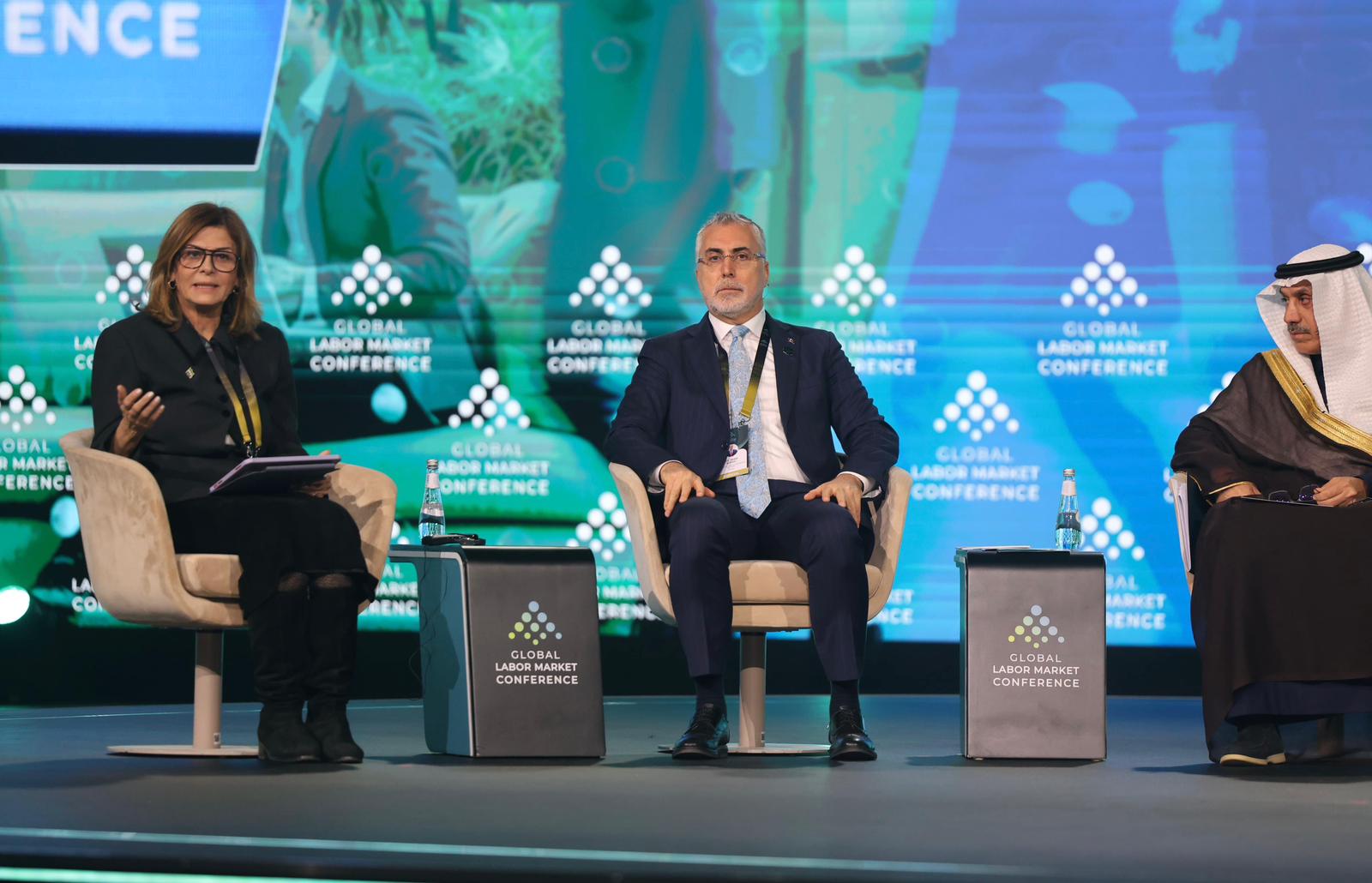
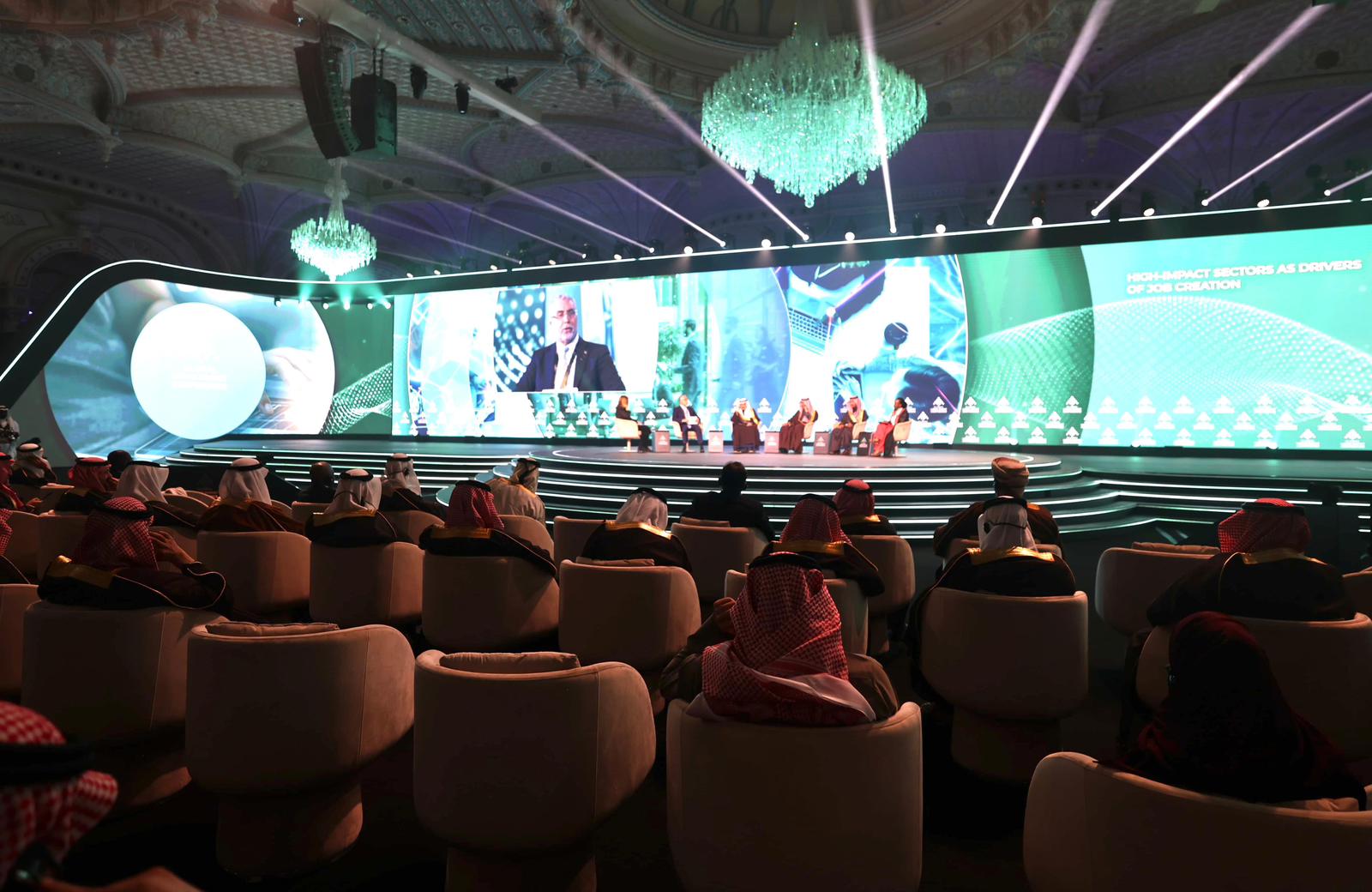
Sectors with Potential of High Impact as the Driving Force of Creating Employment
Delivering a presentation in the panel themed “Sectors with Potential of High Impact as the Driving Force of Creating Employment”, Minister Işıkhan spoke in response to the question on which sector has the highest potential utilized insufficiently yet, in terms of employment creation, considering Türkiye’s economic outlook: “When viewed from Türkiye’s perspective, it would not be appropriate to reduce the potential of creating employment to a single sector. However, manufacturing industry integrated with green transition and value chains depending thereupon rank the first among the fields insufficiently utilized at present. Manufacturing industry is at the centre of our employment policies on account of its multiplicative effect, its capacity to generate qualified and sustainable employment and its structure activating other sectors. In the light of ‘Vision of Türkiye Century’ put forth by our Distinguished President H.E. Recep Tayyip Erdoğan, we are attaching utmost importance to manufacturing industry within our understanding of employment and production-focused growth.”
Noting that this approach was evidently adopted in 12th Development Plan as well, Minister Işıkhan continued as follows:
“In addition, we are addressing sectors such as energy, logistics, agriculture-food, tourism, health and informatics in a holistic framework, together with the principles of green transition, clean production and productivity. Our objective is not only to generate more employment, but also to perpetuate qualified, decent, equitable and sustainable employment by means of these sectors with potential of high impact. Within this framework, we aim to prepare our labour force for the rapidly transforming economic structure through stable policies, sound investments and close collaborations. We are placing sectors with potential of high impact at the centre of our employment policies. We identified the growth in these fields to align with the principles of green transition and sustainability as our main objective.”
Responding the question concerning how the shift to formal employment is addressed while preserving the competitiveness in manufacturing, tourism and digital economy sectors, which take the lead among sectors with potential of high impact in Türkiye, Minister Işıkhan stated, “In recent years, we all observe that certain manufacturing sectors are coming up against severe structural and cyclical challenges both in Türkiye and across the globe. We deal with this issue not only through inspection mechanisms, but also a multi-layered incentive approach facilitating transition to formal employment. In this regard, incentives offered by many of our institutions, our Employment Agency ISKUR and Social Security Institution SSI in particular, play a crucial role. Through ISKUR, participation of tens of thousands of our citizens in employment was ensured, wage and employment supports were provided for notably youth, women and other disadvantaged groups solely within the previous year. Likewise, reductions up to twenty percent in average were achieved in labour costs of firms benefiting from premium discounts and incentives introduced by SSI, which resulted in development of growth, innovation and competitiveness capacity of our firms.
“We Aim to Include 3 Million Young People in Employment within a Three-Year Period”
Pointing out that youth are prepared for labour market within the scope of GÜÇ program through apprenticeship, on-the-job learning and real work experience by keeping them in training process and without excluding them from education, Minister Işıkhan continued, “At the same time, we are guiding them to sectors with high potential of growth such as manufacturing, digital economy, green transition, tourism and services. Within this scope, we aim to include our youth numbering 3 million in employment within three years through First Step to Work, Labour Force Alignment for NEETs and Youth Programs of ISKUR. This model takes not only access to employment, but also permanence in qualified work as basis. Our approach is based upon three fundamental principles: Access of youth to all services through a single digital gateway, early detection and swift guidance through data sharing among institutions and ensuring robust, secure and incessant transition between the World of education and business. To sum up, GÜÇ program enables our youth to transmit their potential to proper skills and sectors at the right time, thereby ensuring the shift of growth to a more inclusive, sustainable and competitive ground."
“We Are Elaborating on Addressing our Employment Policies within a Single Strategic Framework, not in a Fragments”
Responding the question on sharing and example necessitating reconsideration of current policies for generating more effective approaches, as policies implemented in many countries to create employment do not mostly comply with one another despite being high in number, Minister Işıkhan stated:
“The issue in many countries is that the number of policies is high, yet their compatibility with one another is inadequate. Therefore, we are attentive to address our employment policies in a single strategic framework, not in fragments. We base our national employment policies on comprehensive sectoral analyses by depending upon our Development Plans. We closely monitor the labour need in these sectors through regular analyses on labour market, feedbacks from employers and activities in envisaging skills. While carrying out this process with the participation of public institutions, social parties, academia and private sector; we determine the needs of local labour markets through Provincial Employment and Vocational Training Boards in our 81 provinces."
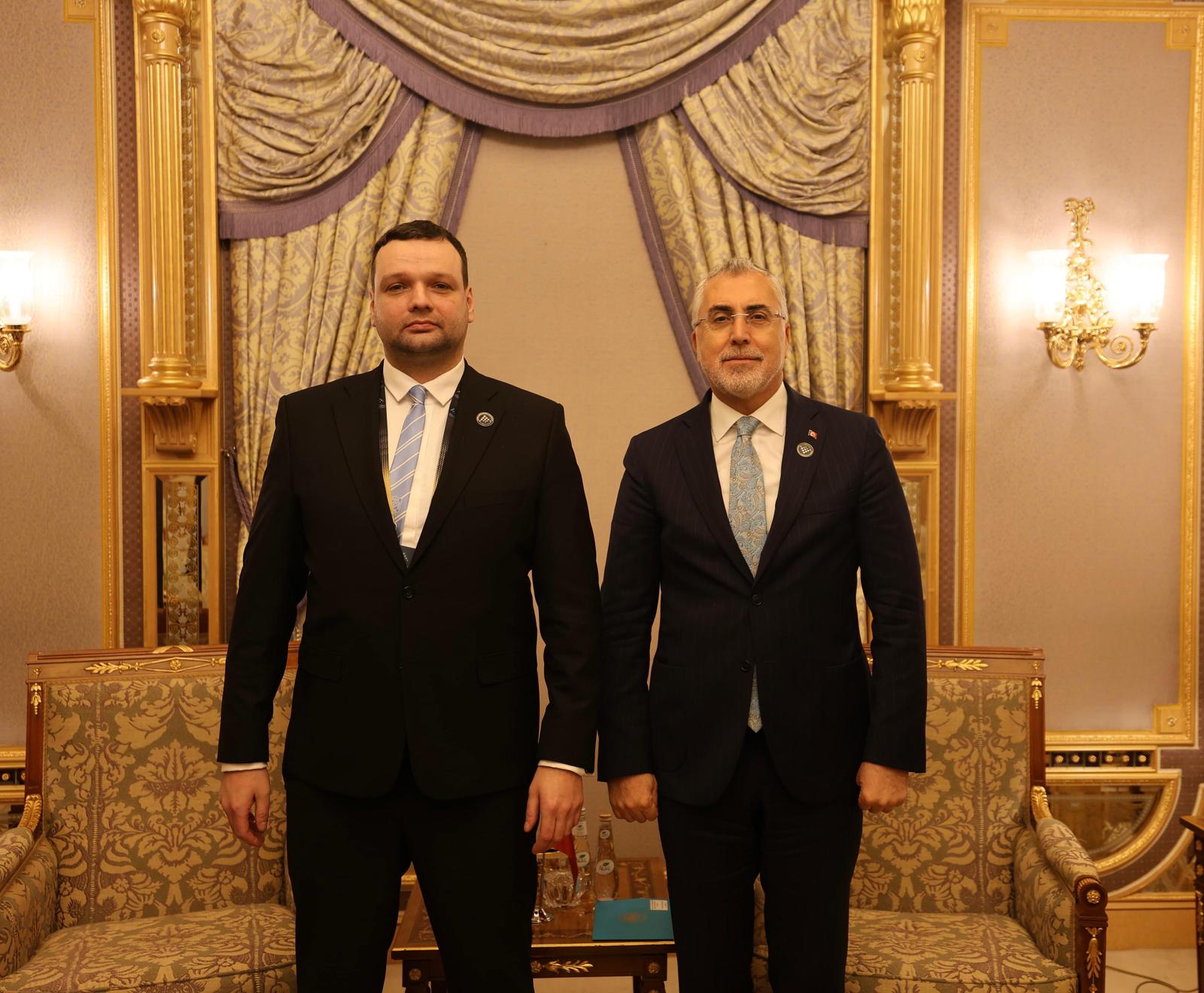
Afterwards, Minister Işıkhan held bilateral meetings with Reizis Uzulnieks, Minister of Social Welfare of Latvia and Dr. Enas Dahadha Attari, Minister of Labour of Palestine, within the scope of his program in Riyadh.
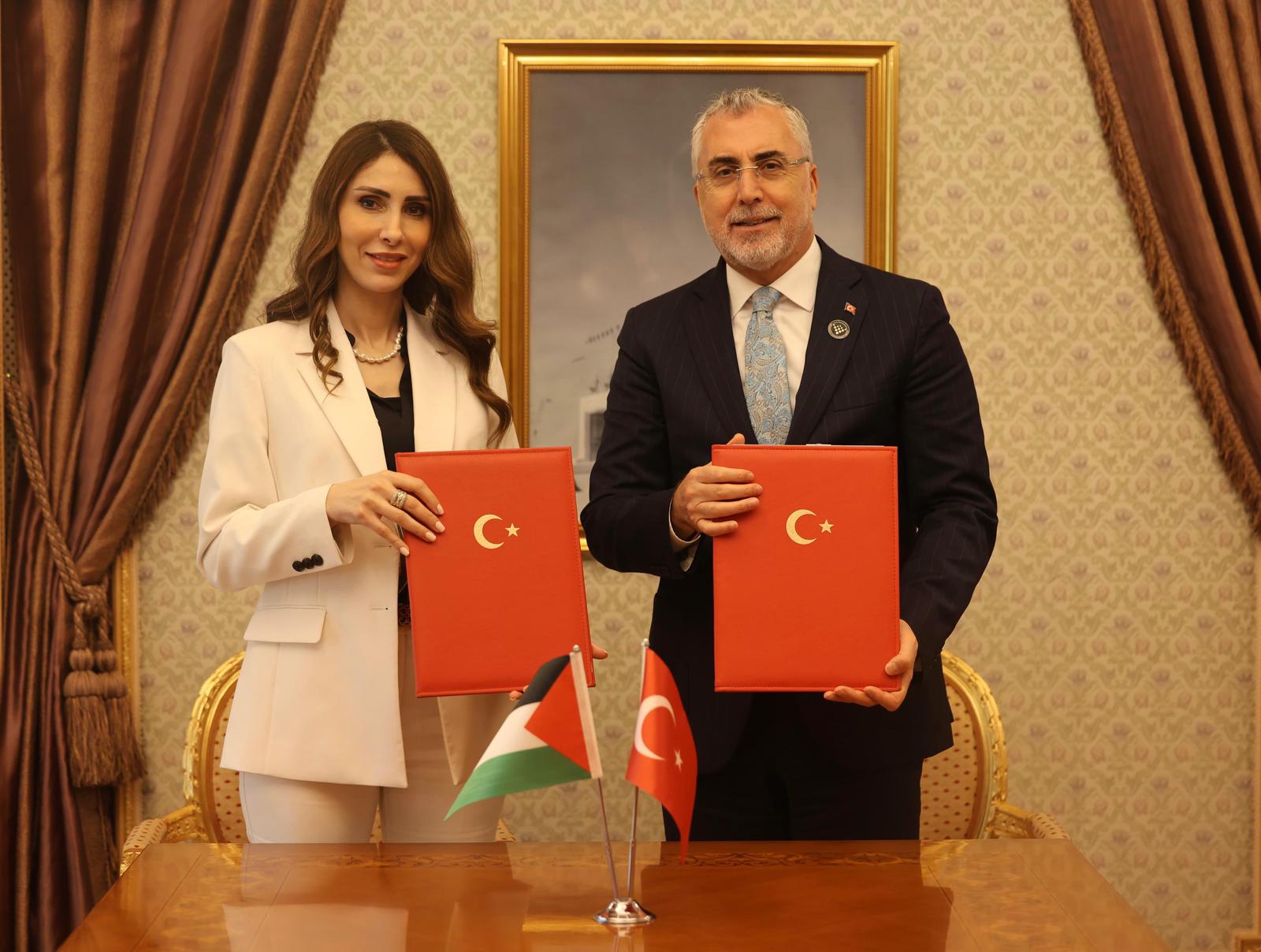
Following the meeting, Memorandum of Understanding on Cooperation between Türkiye and Palestine in the Fields of Labour and Employment was signed.