


The 2026 Budget of Our Ministry Has Been Adopted by the General Assembly of the Turkish Grand National Assembly (TGNA)
17 December 2025, Wednesday


The 2026 Budget of Our Ministry Has Been Adopted by the General Assembly of the Turkish Grand National Assembly (TGNA)
Minister of Labour and Social Security Prof. Dr. Vedat IŞIKHAN delivered a speech on the Ministry’s 2026 budget at the General Assembly of the Grand National Assembly of Türkiye.
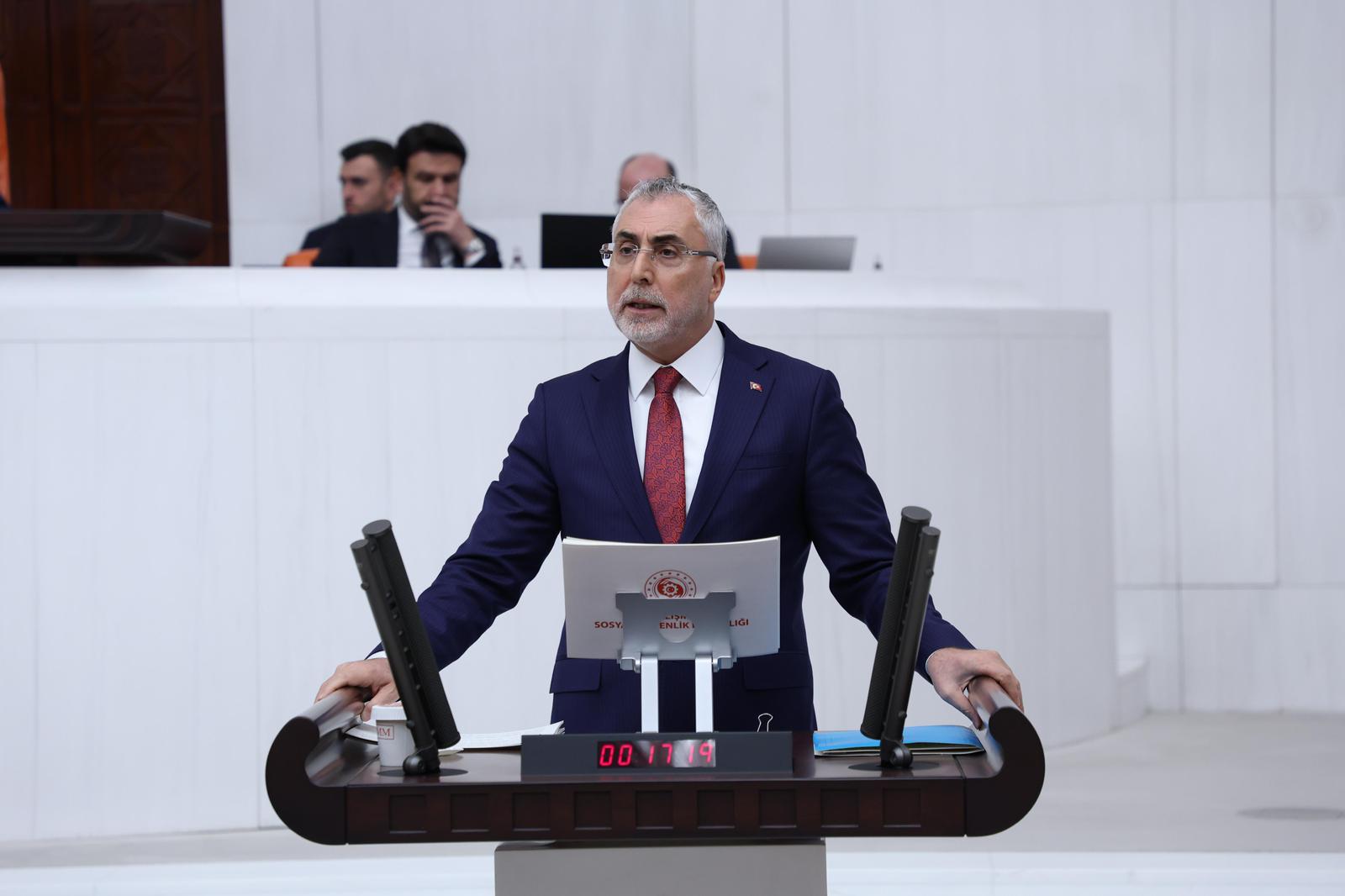
Minister IŞIKHAN informed the Assembly on the international labour conventions adopted this year at the International Labour Conference, the highest decision-making body of the International Labour Organization (ILO).
Referring to Article 19 of the ILO Constitution, which recommends that conventions and recommendations adopted at the International Labour Conference be submitted to the competent national authority for information and approval, Minister IŞIKHAN stated: 'At the 113th International Labour Conference held in June this year, Convention No. 192 concerning the Prevention of and Protection against Biological Hazards in Workplaces, together with the complementary Recommendation No. 209, were adopted. During the voting held at the Conference, our country voted in favour of the adoption of the said convention and recommendation.
Noting that the ILO Governing Body, at its 341st Session held in March 2022, identified gaps in the standards concerning biological hazards and accordingly tasked International Labour Office with developing new standards in this regard, Minister IŞIKHAN continued as follows:
“The Convention on Biological Hazards in the Working Environment, also known as Convention No. 192, is the first international convention focusing on protecting workers against biological hazards in workplaces. The objectives of the Convention can be outlined as follows: protecting workers against biological hazards; enhancing occupational health and safety; improving information and training; strengthening health surveillance; ensuring preparedness and response; defining the responsibilities of employers and workers; and safeguarding public health. The Convention also defines the concepts of biological hazards, exposure to biological hazards in workplaces, biological risk, the assessment of biological risks by the competent authorities, and workers.”
“ILO Conventions Are Binding Instruments for Member States Upon Ratification”
Stating that the Convention applies to workers in all sectors of economic activity, IŞIKHAN noted: “ILO Conventions are binding instruments for member states upon ratification. Recommendation No. 209 concerning Biological Hazards in Workplaces, adopted by the Conference, provides a more detailed and flexible guidance on the measures to be taken against biological hazards in workplaces in order to support the implementation of Convention No. 192. Significant amendments have been introduced under the following headings in the Code part of the said Convention: Recruitment and Placement; Entitlement to Leave and Repatriation; Entitlement to Benefits; Accommodation and Recreational Facilities; Medical Care on Board and Ashore; Protection of Health and Safety and Accident Prevention; Access to Shore-based Welfare Facilities; Flag State Responsibilities; On-board Complaint Procedures. As is well known, the ratification process of Maritime Labour Convention is currently ongoing in our country,”.
In his speech on the budget, Minister IŞIKHAN also drew attention to the fact that, in the period the world is currently going through, working life is being almost rewritten and reshaped on a daily basis, stating: “The pace of technological advancement, increasingly interdependent economies, global uncertainties, and the climate crisis altering all balances… All of these are major components of a wave that is fundamentally transforming labour markets. It is no longer only machines that are changing; the way work is carried out, the expectations of workers, the competitive approaches of businesses, and even all formulas upon which societies’ prosperity is built are being completely renewed.”
Drawing attention to the fact that concepts such as digitalisation, artificial intelligence, green transition, flexible and new-generation working models are now realities embedded in everyday life that directly affect every emloyee and every employer, IŞIKHAN stated: “As the nature of work changes, the need for social protection—particularly for vulnerable groups—is increasing across the world, and the issue of employment security is being discussed more vocally. When we add to this the impact of technology in transforming occupations from top to bottom, a necessity arises before us: to prepare labour and production for the conditions of the future.”
Pointing out that, while many professions are losing their significance today, new job and employment opportunities are emerging in entirely different fields, Minister IŞIKHAN continued as follows:
Countries that fail to grasp the soul of this transformation fall behind. However, those that understand it, prioritise it and turn it into an opportunity gain strength both economically and socially. As the Ministry, with this awareness, we are determined to transform Türkiye’s working life into not a passive observer of this global change, but a strong actor. We regard it as an imperative to design and implement policies that will make our labour markets more resilient, prepare our social protection and social security system for the future, and accelerate the skills transformation of our workforce. The work, targets and priorities that I will share with you today are a clear indication of Türkiye’s vision for a working life that is strong, competitive, production-oriented and, at the same time, ‘leaving no one behind’ in this global transformation.
“Today, We Have Succeeded in Increasing the Number of Employees to Above Pre-Earthquake Levels”
IŞIKHAN shared the following information regarding the activities of the Ministry of Labour and Social Security in the earthquake-affected region:
“Immediately after Kahramanmaraş-centred earthquakes dated 6-7 February we experienced, as the Ministry, we acted very swiftly and mobilised all our resources to protect employers, employees and their families in the region; because we needed to rapidly restore these cities—whose factories, workplaces and workshops had been destroyed—in terms of employment and the economy. To this end, we promptly activated numerous mechanisms, ranging from short-time working allowances and cash wage support to Community Benefit Programmes and unemployment benefits. To date, the total amount of expenditure we have solely made in these areas has exceeded 40 billion Turkish liras. On those difficult days, the steps we took to ensure our citizens’ livelihoods, prevent the closure of workplaces and keep our people linked to production became the most critical interventions for the revival of the earthquake-affected region. Immediately after the earthquake, the number of insured employees in our 11 provinces had almost been reduced by half. In December 2022, that is, before the earthquake, there were a total of 1 million 889 thousand insured employees in these 11 provinces. Due to the earthquake, this number unfortunately decreased by nearly half. Today, we have succeeded in increasing the number of employees to above pre-earthquake levels. I can proudly state that the number of insured employees has now reached 2 million 59 thousand.”
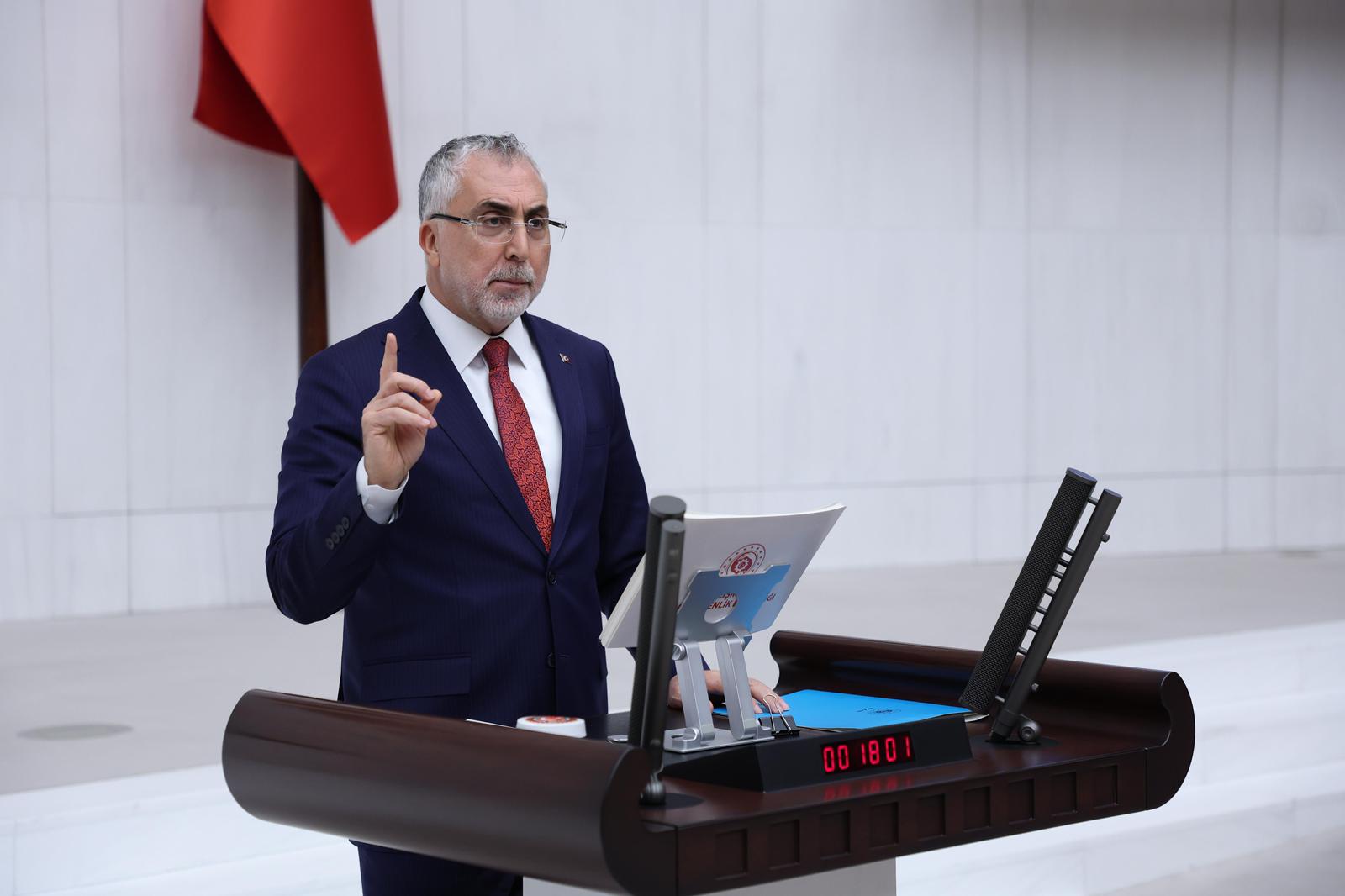
Noting that the Ministry had deferred the premium debts of employers in earthquake-affected region, extended restructuring periods, and supported them in maintaining production and economic activity by easing their administrative and financial burden,, Minister IŞIKHAN stated: “In short, in the face of the disaster of the century, the state and the nation stood shoulder to shoulder. As the Ministry, we made a great effort to fully fulfil the dimension of labour life concerning this remarkable solidarity. The number of housing units and workplaces delivered to our citizens in the earthquake-affected region is increasing day by day. We watch the key handover ceremonies with great pride. Türkiye has become a country that has transformed the disaster of century into solidarity of century. If we have achieved this, it is primarily thanks to the prayers of our dear nation, and then to the vision and determination of our Esteemed President. We achieved this through the dedication and efforts of all MPs in the Assembly, particularly our MPs from the region, first and foremost those representing Kahramanmaraş, Hatay, Gaziantep and Malatya. On this occasion, I would like to thank each and every MP.”
“Our Social Security System Is the Most Concrete Embodiment of the Principle of Social State”
Emphasising that the social security system is the most concrete manifestation of the principle of the social state, IŞIKHAN stated: “For this reason, we consider strengthening the coverage, financial sustainability and service quality of the SSI as a strategic priority. Our aim is to build a social security structure that is compatible with new-generation working models, easily accessible to citizens, transparent, strong and robustly focusing on the future. As for the level we have reached today, while the ratio of SSI revenues to expenditures was 71.5 per cent in 2002, this ratio is foreseen to rise to 95.3 per cent by the end of 2025. Over the same period, the ratio of premium revenues covering pension payments and health expenditures increased from 60.9 per cent to 75.1 per cent. Likewise, while the ratio of SSI deficit to national income stood at 2.2 per cent in 2002, it is expected to decline up to 0.42 per cent by the end of 2025. These figures clearly demonstrate the strength of the improvement we have achieved in the financial structure of our social security system.”
Stating that, while easing the financial burden on employers through premium incentives and supports, the Ministry has continued to contribute directly to employment, IŞIKHAN said: “During the period from 1 January 2023 to 30 September 2025, we provided a total of 890 billion Turkish liras in incentives to approximately 2 million workplaces on account of 13 million 222 thousand insured employees. One of the most important indicators of the SSI’s coverage is the number of active insured persons. While the number of actively insured persons stood at 12 million in 2002, it increased by 120 per cent, reaching 26.5 million as of September 2025. The rate of unregistered employment, which was 52 per cent in 2002, declined to 26.9 per cent according to the data for the third quarter of 2025.”
Recalling that the minimum pension increased to 14,469 Turkish Liras in January 2025 and further rose to 16,881 Turkish Liras in July, the Minister stated: “We increased the holiday bonus provided to our pensioners to 4.000 Turkish Liras; since 2018, we have paid a total of 366.7 billion Turkish Liras as bonuses. The fact that social security coverage has reached 99 per cent demonstrates the level of Türkiye’s social state capacity and the success it has achieved.”
“We Have Included Continuous Glucose Monitoring Devices in the Scope of Reimbursement for Our Children with Type 1 Diabetes”
Stating that, in line with the fundamental objective of “health coverage for all,” citizens without any form of social security are able to benefit from healthcare services together with all their family members by paying a Universal Health Insurance premium amounting to only 1,560 Turkish lira, Minister IŞIKHAN noted as follows:
“We are always indebted to our Esteemed President for pioneering the Social Security Reform, which stands as one of the most advanced practices in the world. As of September, the GSS premiums of 5.7 million people have been covered by our state, and by the end of the year, the amount covered within this scope is expected to reach 128.7 billion Turkish liras. By continuously expanding the scope of access to medicines and treatment, we stand with our citizens. In the early 2000s, there were 3,986 medicines on the reimbursement list; today, with the inclusion of 72 medicines announced, this number has increased to 8,877. In 2025 alone, 372 medicines were added to the list, 52 of which are medicines peculiar to cancer treatment. We have included Glucose Monitoring Devices in the scope of reimbursement for our children with type 1 diabetes. During the period from December 2024 to September 2025, more than 76,000 prescriptions were covered, and a cost of approximately 610 million Turkish lira was borne by the SGK. The convenience these devices provide to our families and the improvement they bring our children’s quality of life constitute our greatest source of pleasure.”
Reporting that new incentive mechanisms have been introduced to ensure that healthcare services are used at the appropriate levels, IŞIKHAN stated: “We have implemented the practice whereby contrast agents used in CT and MRI imaging are supplied by hospitals. In addition to the medicine that has been included in the scope of reimbursement for SMA patients since 2017, we have added another medicine to the reimbursement list that offers ease of use. For persons with Hemophilia A, we have included in the reimbursement coverage a treatment that allows subcutaneous administration at home; this arrangement, which provides significant convenience especially for children, has substantially improved and facilitated the lives of these families. We have increased the number of medicines that family physicians are authorised to prescribe to 6,000. Moreover, within the framework of rational use of medicines, we are preventing waste by introducing package limits, except for medicines prescribed with a medical report.”
“As of July 2025, We Have Added 5 Immunotherapy Drugs Used in 25 Different Cancer Subtypes in the Reimbursement List”
Stating that, in a move of revolutionary significance in the history of SSI and by taking another major step in cancer treatments, five Immunotherapy Drugs used in 25 different cancer subtypes, as well as the medicine used in the treatment of cystic fibrosis, were added in the reimbursement list as of July 2025, Minister IŞIKHAN shared the following:
“One thousand of our patients with cystic fibrosis have benefited from these treatments. Some of the services we have recently included within the scope of reimbursement are as follows: for cancer medicines, 9 billion Turkish liras for 45,000 patients; for 637 patients with SMA, 1.3 billion Turkish liras; for 788 patients with hemophilia, 1 billion Turkish liras; for 3,255 patients with familial Mediterranean fever, 500 million Turkish liras; and for Continuous Glucose Monitoring Devices, 810 million Turkish liras for 25,000 patients. An average of 2.2 million Turkish liras has been spent from the SSI budget for a patient with SMA, and an average of 2 million Turkish liras for a patient with hemophilia. We will continue to stand by the side of our citizens in every matter that concerns their health and eases their burden. Nothing is more important than the health of our children, our pensioners and our citizens.”
Emphasising that they do not hesitate to do whatever is necessary for the health of even a single citizen, guided by the principle “Let the people live so that the state can survive,” IŞIKHAN stated: “Health and social security services, which are among the most fundamental human rights, are today facing a major financial crisis even in countries indicated as examples. In an effort to address these problems, governments are trying to sustain their systems either by cutting down on finances or by demanding substantial contributions from their own citizens. While the world is experiencing this reality, wherever we go—both at home to all our citizens, and abroad to our counterparts—we proudly explain that we provide these services for our citizens almost free of charge. The most important component of this pride is you, our Supreme Assembly, which enacted these laws. Out of respect for our citizens’ health, pension security and social protection rights, we will continue to strengthen these policies without interruption. We are also determined to put the understanding of the social state into practice in every field and not to leave our nation alone in the face of risks of life.”
“Within the Scope of the Minimum Wage Support, We Provided a Total of 46.8 Billion Turkish Liras in Support to 1.5 Million Workplaces in the First Nine Months of 2025”
Pointing out that they are working resolutely to place the entire ecosystem of working life on a dynamic and robust footing—one that adapts to constantly changing conditions and can respond swiftly to needs—Minister IŞIKHAN stated: “Because we know that Türkiye’s future can only be secured by enhancing today’s labour and production capacity in qualitative terms. As the Ministry, and as a requirement of social dialogue in working life, we actively operate all consultation mechanisms. In 2025, we convened the ‘Tripartite Consultative Board’ and the ‘Public Personnel Consultative Board’. We will also convene the 14th Labour Assembly soon under the theme ‘Digital Transformation in Working Life’. We increased the Minimum Wage Support, which we have been implementing since 2016, to 1,000 Turkish liras per month for 2025. Within this scope, in the first nine months of 2025, we provided a total of 46.8 billion Turkish liras as support for 1.5 million workplaces. In addition, we had abolished taxes on income up to the level of the minimum wage for wage earners. In 2026, we will forgo a total of 1 trillion 92 billion Turkish lira in taxes within this scope. This amount is more than twice the amount of our Ministry’s 2026 budget proposal”.
Emphasising that they regard protecting labour, expanding production, and strengthening the entire nation—employees and employers alike—as their fundamental duties, Minister IŞIKHAN underlined that every step taken in this direction is aimed at enabling Türkiye to look to the future with greater confidence.
“We Actively Maintain the Social Dialogue Process by Engaging with Our Worker and Employer Representatives”
Reporting that the Minimum Wage Determination Commission has been convened to set the minimum wage for 2026, IŞIKHAN stated: “By engaging with our worker and employer representatives, we are actively maintaining the social dialogue process. As the Commission, we will continue our endeavours to ensure the 2026 minimum wage is determined at a common point that protects workers’ incomes against inflation while safeguarding employment and macroeconomic balances. As the Ministry, one of our most fundamental responsibilities is to ensure that every worker is employed under decent working conditions, to achieve the highest standards in occupational health and safety, and to continuously strive for making workplaces safer and more qualified. On July 4, 2025, we convened the National Occupational Health and Safety Council. There, we initiated the preparation process for the ‘National Occupational Health and Safety Policy Document,’ which will guide our country’s direction for the period 2026–2030. This document will serve as a comprehensive roadmap aimed at enhancing the safety culture in workplaces across Türkiye.”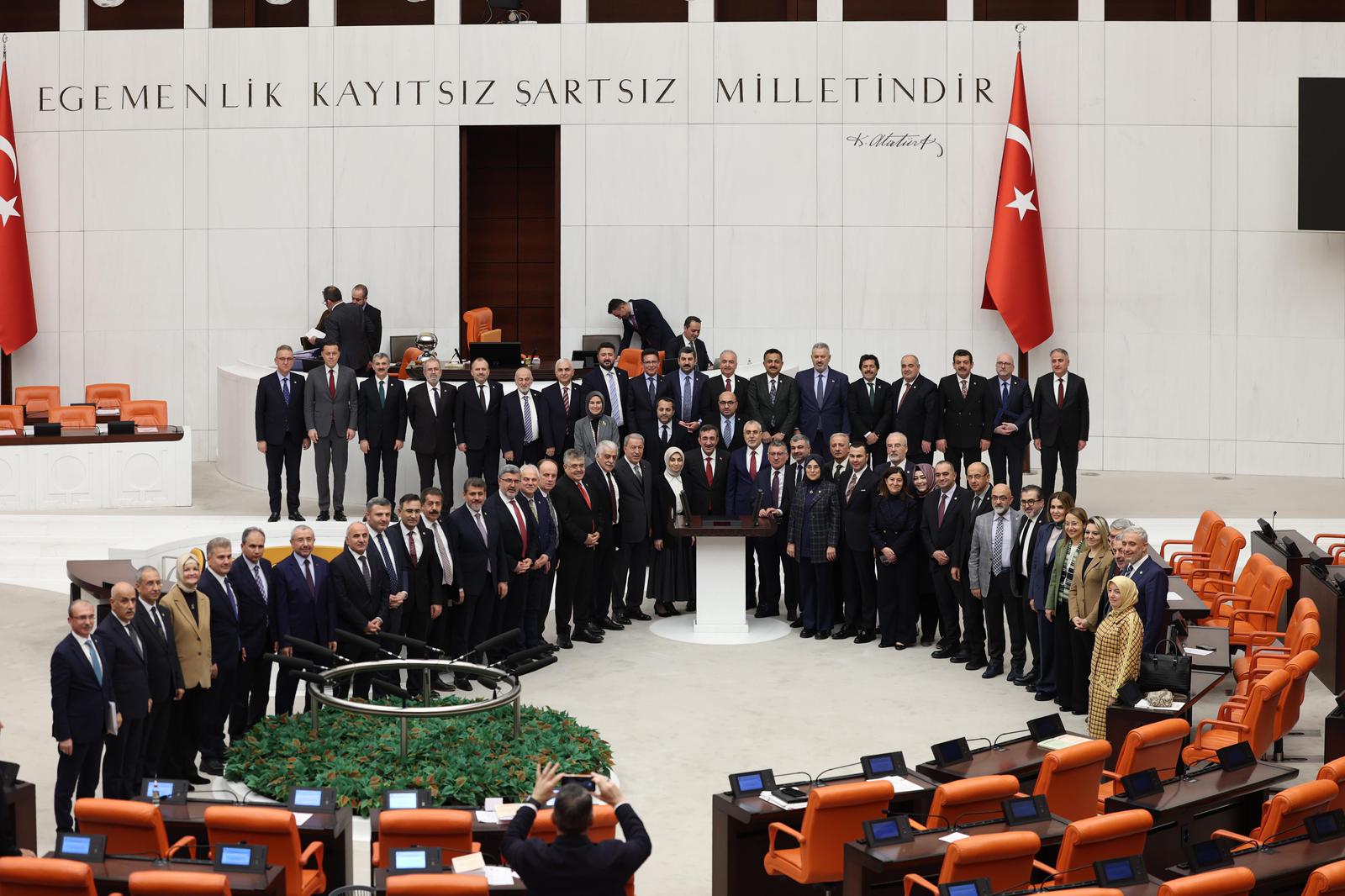
“We Show No Leniency to Those Who Are Negligent in Occupational Health and Safety”
Noting that at the end of 2022 the number of workplaces receiving OHS (Occupational Health and Safety) services was increased from 166,000 to 782,000 as of today, Minister IŞIKHAN stated: “We increased the number of workers receiving OHS services from 6 million 400 thousand to 11 million 257 thousand. On the other hand, as our President has also stated, we show no leniency to those who are negligent in occupational health and safety. Whether employers, experts, municipalities or public institutions—whoever is responsible, we take the necessary action. As of December 2025, we carried out guidance and inspection activities at 10,957 workplaces, reaching more than 1 million 328 thousand employees within this scope. Thanks to these inspections, we ensured that approximately 992 million Turkish liras in underpaid labour receivables were paid to workers. When employees’ rights and their labour are at stake, we never hesitate. We make no concessions from this principle in our inspection processes.”
“As of October, Türkiye Has Reached Its All-Time Level of Employment”
Underlining that Türkiye’s employment vision is being pursued within a solid and long-term framework in full coordination with economic management, IŞIKHAN continued as follows:
“We know that the most critical component of sustainable growth, social welfare, and a strong future is a stable employment structure. As the Ministry, we will continue to shape all the policies and programs we implement in line with this understanding. As of October, Türkiye has reached its highest level of employment in its history. Accordingly, our labour force increased by 157 thousand to 35.8 million, while the number of employees rose by 185 thousand to 32.8 million. The number of unemployed persons decreased by 27 thousand, and the unemployment rate fell to 8.5 percent, maintaining its single-digit trend for the past 30 months. Over the next three years, we aim to increase employment by an annual average of 842 thousand people. According to the recent data, the decline in youth unemployment rate to 15.6 percent and the decrease in the share of young people neither in education not in employment to 25.4 percent are the most concrete outcomes of the policies we have implemented.”
“As of Today, the Unemployment Insurance Fund Has Exceeded 600 Billion Turkish Liras”
Emphasising that since 2002, 5.5 million women, 561 thousand persons with disabilities, and approximately 5.5 million young people have found employment through İŞKUR’s (Turkish Employment Agency) services, Minister IŞIKHAN stated: “We provide employers who create additional employment with premium support of up to 41 thousand Turkish liras per insurance holder. Preparations are ongoing to extend this incentive until the end of 2026. At the same time, we are managing Unemployment Insurance Fund, which finances our employment supports, in a robust manner. As of today, the Fund has exceeded 600 billion Turkish liras.”
Employment of Persons with Disabillities
“Through Accessible ISKUR Platform, we have consolidated all services under a single roof. Within the Supported Employment Project for individuals with mental disabilities, we provide monthly wage support of up to 26,000 Turkish Liras per person. For citizens with disabilities who wish to start their own businesses, we have simplified regulations to create a much more accessible support system. Under the Accessible Workforce Adaptation Program launched in July 2025, we established a quota for 10,000 people across 81 provinces. As of today, more than 5,000 citizens have benefited from this program which is gradually implemented. Our citizens with disabilities no longer stay at home as they did in the past. Our engineers, robotics specialists, AI experts, content creators, and entrepreneurs with disabilities are now in offices, factories, and workshops, enhancing Türkiye’s production power. We will guide every individual with a disability who wishes to work towards production and employment. We will leave no one behind. As the Ministry, we will stand with them and provide them with the greatest support. Together, we will build the Century of Türkiye.”
Emphasising that they have made wide strides in women’s employment in recent years, Minister IŞIKHAN stated as follows:
“The WAP (Workforce Adaptation Program), which we launched in September 2024, has become a new gateway especially for those facing difficulties in joining the workforce: women, young people, citizens with disabilities, and students. To date, nearly half a million of our citizens have benefited from this program, with 82 percent of participants consisting of women. I encourage our citizens who wish to benefit from the WAP to apply to our provincial labour and ISKUR directorates. We will continue to successfully implement this program in the upcoming period.”
ISKUR Youth Program
Noting that the ISKUR Youth Program, announced by President Recep Tayyip Erdoğan in February 2025, aims to provide university students with work discipline and to enhance their employment prospects after graduation, IŞIKHAN stated: “On behalf of our youth, I would like to thank our Esteemed President for his support for ‘ISKUR Youth Program’, the largest project in Türkiye’s higher education history aimed at preparing students for working life.”
Minister IŞIKHAN noted that, within the scope of Workforce Adaptation Program, they have developed new policies to reintegrate young people who are neither in education nor in employment (NEET) into the labour market.
“We Are Launching Türkiye’s ‘Gateway to Employment’ Project”
Stating that “Our single goal in all these steps is to equip our workers with the new skills required by the transformation, strengthen social protection, support employment and ensure the sustainability of social security system,” IŞIKHAN added: “Türkiye’s labour force will not fall behind in this transformation; on the contrary, it will be at the forefront of it. We are launching ‘Türkiye’s Gateway to Employment’ project, which will unite all job postings—currently scattered online—under a single platform for job seekers. This will create a more accessible system for our citizens seeking employment and enable employers to more quickly reach the qualified workforce they need. We continue our technical work to expand passive labour force programs to wider groups and to simplify the conditions for benefiting from Unemployment Insurance Fund. Ensuring that citizens who have lost their jobs receive faster support during this process is among the priorities in the field of social policy.”
Minister IŞIKHAN stated that the bill which introduces a new support model designed to preserve the manufacturing sector’s production capacity and ensure that businesses, particularly in labor-intensive industries, maintain employment has been passed by Parliament, and continued as follows:
Highlighting that, under the leadership of H.E President Recep Tayyip Erdoğan and together with the People’s Alliance, the goal of a ‘Türkiye Without Terror’ will ultimately carry Türkiye to higher levels through strengthened unity, solidarity, and brotherhood, IŞIKHAN stated: “I would like to give an example of how the investment environment created by a Türkiye Without Terror can contribute to progress in employment and working life: In Şırnak, the unemployment rate was 21.5 percent in 2022. Thanks to the investment environment generated by GABAR Petroleum and our ISKUR services, this rate fell to 7.9 percent in 2024. This rapid and significant improvement in Şırnak raises the question: Why would such a success not be seen across the region and throughout Türkiye with a 'Türkiye Without Terror'?In every inch of Türkiye, we will continue to walk, produce, work, and increase employment in line with the Türkiye Century vision set by our Esteemed President. To end my speech, I would like to emphasize that we will utilize our 2026 fiscal budget in the most possibly efficient way.”
At the end of his speech, Minister IŞIKHAN wished that the 2026 budget and all the initiatives to be carried out with this budget would be beneficial and auspicious for the country and nation.
In the General Assembly of TGNA, the 2026 budgets of the Ministry of Labour and Social Security and its affiliated institutions were adopted.